Boneless Couch or Bean Bag Sofa? Look at the Seat, Not Just the Name

Seating shape illustration, not to scale.
Some bean bag sofas look like oversized floor cushions. Others have a back and arms that resemble a couch. Boneless sectionals can look quite sofa-like too, so the names in a search result don't always tell you where or how you'll sit.
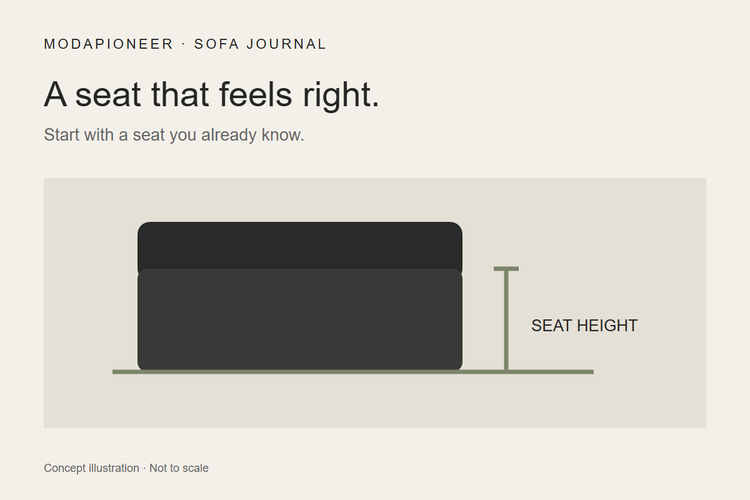
Rather than sorting every product into one neat category, compare the particular seat: its shape, filling, height, and the space it occupies in your room.
Start with the shape you want to use
A loose-filled bean bag seat and a shaped sectional can offer different ways to lounge. If you're choosing a bean bag-style option, look at the product photos and description to see whether it has a defined back, arms, or separate seating places. Those details vary by design.
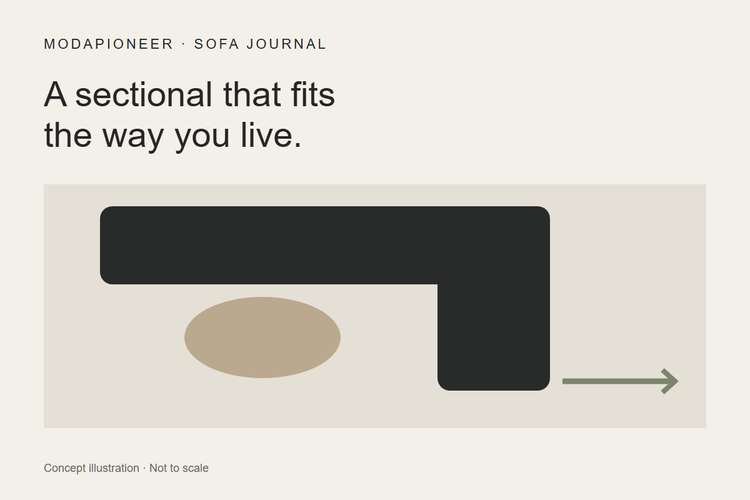
Our 96-inch boneless sectional has a recognizable L-shaped outline, with a chaise beside the regular seats. One person can put their legs up while another uses a seat alongside them. If that's the arrangement you picture in your living room, it gives you a concrete shape to plan around.
If you want a movable extra seat for another room, compare the actual dimensions and weight of that item. A bean bag label alone doesn't tell you whether a particular piece will be easy for you to carry.
Look inside the specific product
Bean bag-style furniture can use different fillings, including loose pieces or beads. Other soft seats use shaped foam. A boneless couch can also have different constructions from one model to another.
The 96-inch model combines individually pocketed coils and high-density foam. That tells you more about its support construction than the name “boneless” by itself. It doesn't mean every boneless couch has springs, or that all bean bag furniture has the same filling.
If you can try a comparable seat, notice how it feels when you sit upright and when you lean back. Otherwise, look for clear information about the filling and the usable seat dimensions, then ask the seller about details that matter to you.
Plan for the piece at its full size
An item that arrives compressed or looks soft still occupies floor space once it is in use. Mark the outside footprint of each option, including any extended chaise or back, and leave room to approach it.
For the 96-inch sectional, the outer width is 96 inches and the maximum overall depth is 60.2 inches at the chaise. The sectional measuring guide covers the room and delivery route in more detail.
Think about where the piece belongs when nobody is using it, too. Will it stay in a seating group, or do you intend to move it between rooms? Check the actual product information before assuming it folds, has a washable cover, or can be rearranged.
Choose the role before the label
For your main living room seating, you may prefer a defined couch shape with a chaise. For an extra place to curl up, a bean bag-style seat may be the better fit for your plans. Compare individual products and keep the arrangement that matches how you want the room to work.
Shop the sofas mentioned here
 Black 96-inch L-Shaped Couch