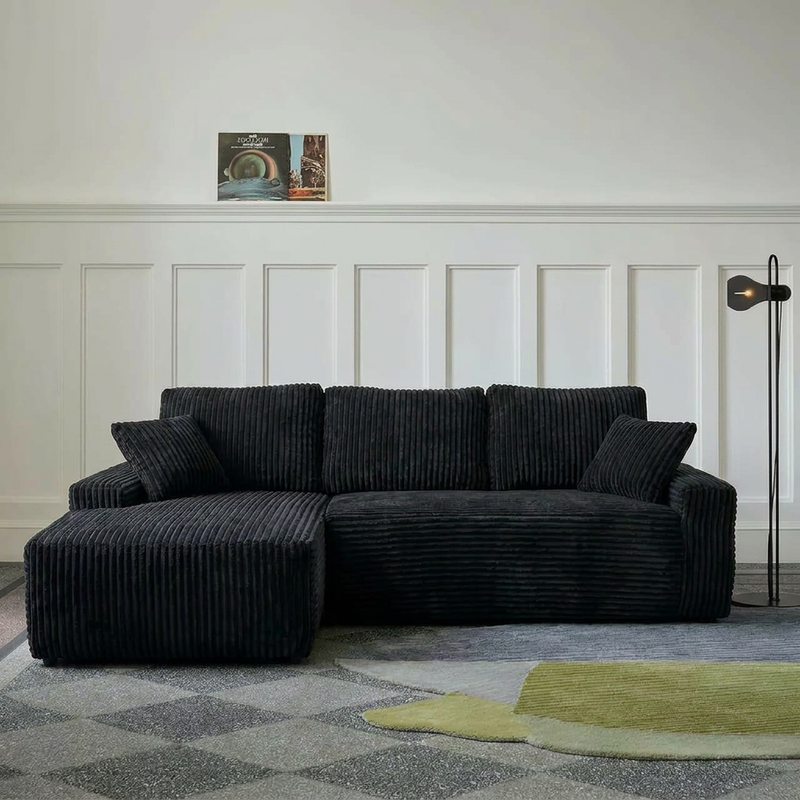
96" vs. 131": Which Sofa Size Fits Your Room?
The difference between a 96-inch L-shaped couch and a 131-inch U-shaped couch is easy to see on a floor plan. One has a chaise on a single side; the other extends on both sides. The wider layout uses another 35 inches across the room.
That changes where you can put a table and how people enter the seating area. Start with those positions rather than treating the larger size as an automatic upgrade.
Compare the outlines
| Model | Overall width | Maximum overall depth | Shape |
|---|---|---|---|
| 96-inch L-shaped Boneless Couch | 96 in | 60.2 in | Chaise on one side |
| 131-inch U-shaped Boneless Couch | 131 in | 60.2 in | Chaise on both sides |
These are the outside dimensions. The L-shaped couch doesn't fill the entire bounding rectangle, and neither set of measurements gives you a usable seat depth or a fixed number of adult places.
How the L shape uses a corner
The 96-inch L-shaped couch gives one person a place to stretch out while leaving the opposite side of the seating area open. That opening can be useful for a chair, a side table, or the route into the room.
Confirm the chaise side for the configuration you're considering. Mark it on the floor with your existing furniture nearby, then walk the route between the doorway and the rest of the home.
What changes with the U shape
The 131-inch layout extends the lounging area on the other side. That can suit a room with enough width, but both extensions need space around them. A passage that remains open beside an L shape may disappear beside the U.
Use the 131-inch model details as a reference when drawing that outline. This comparison explains the two layouts; check the selected listing for current availability.
Put the rest of the room back in
Draw the coffee table, doors, and any chair you plan to keep. Imagine the seats occupied, with feet extended where people normally put them. Check the screen view if this is also the TV room.
Both models have corduroy upholstery with individually pocketed coils and high-density foam. The room decision comes down to where you want the lounging positions and which routes need to stay open. If the extra width crosses a route you use every day, the L-shaped outline is the more useful one to keep testing.